Best Board Games for Exactly 7 Players
Seven players is a notoriously awkward count. Most games top out at 6 and most party games feel thin at 7. Here are the ones that actually work.
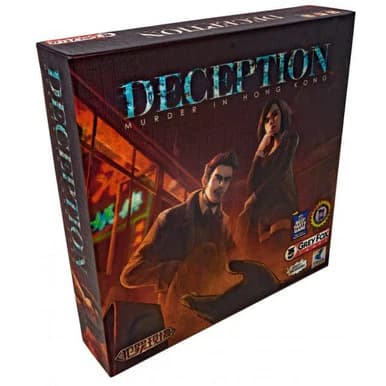
- Best OverallDeception: Murder in Hong Kong(4-12 players)
One player is the forensic scientist. They know who the murderer is and what weapon and evidence they used — but they can't speak. Instead, they place tokens on abstract clue boards (things like "cause of death" or "location") and hope the room figures it out. Everyone else is an investigator, talking through the clues, accusing each other, and trying to piece together the truth. Except one of them is secretly the murderer, trying to deflect attention. Rounds run about 20 minutes. The scientist places a clue, the table erupts in debate, then you vote. If you catch the murderer, the investigators win. If not, the murderer escapes. It works from 4 to 12 players, though 6-8 is the sweet spot where there's enough noise to hide in but not so many people that you lose track. The structure is what makes it better than most social deduction games. The scientist isn't just sitting there — they're actively trying to communicate. And the murderer isn't just denying things — they need to actively push suspicion onto someone else. It gives everyone a job, which keeps the table engaged.
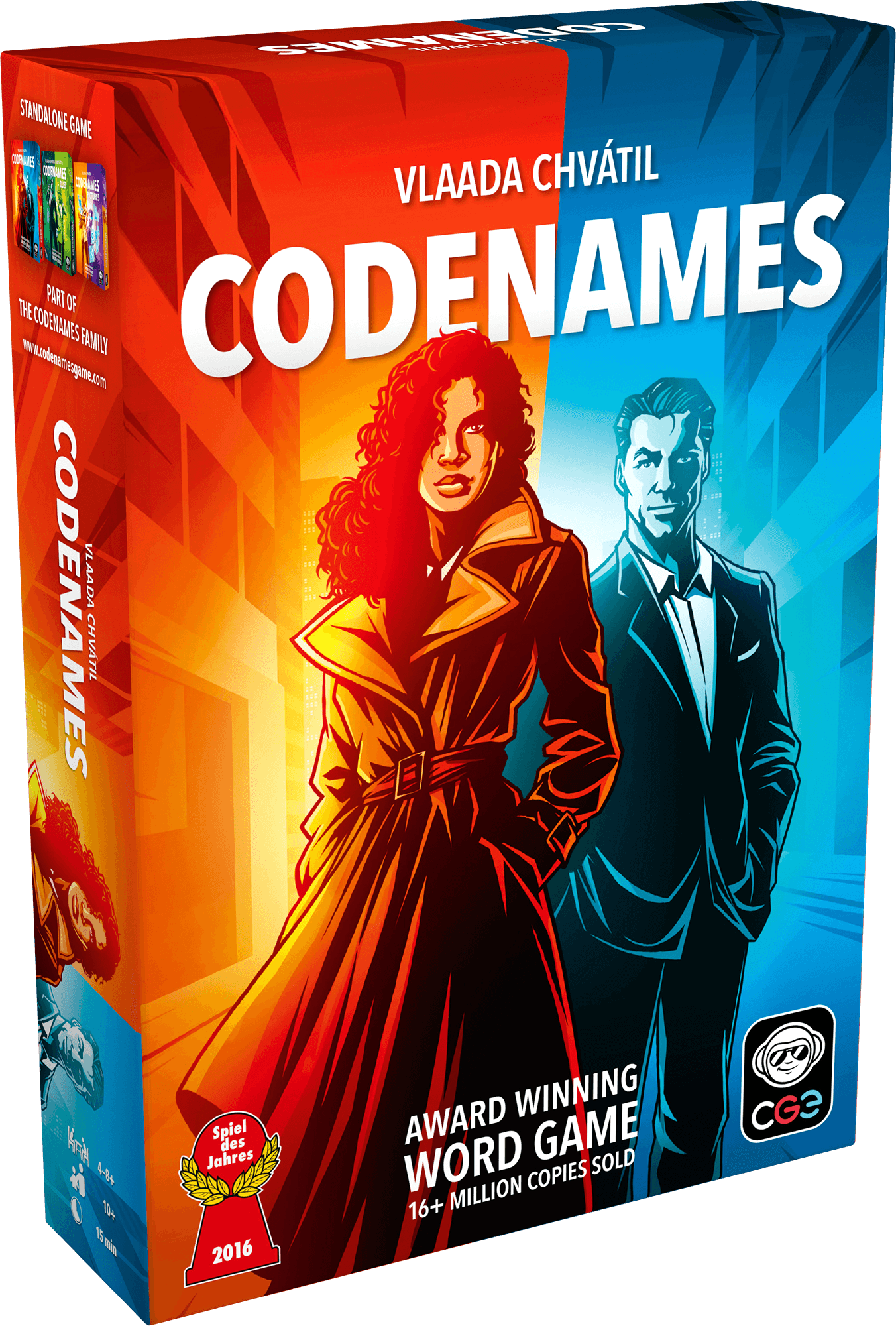
- Best for StrategyCodenames(2-8 players)
Two teams, each with a spymaster. The spymasters look at a key card showing which words on a 5×5 grid belong to their team. Then they give one-word clues followed by a number — like "Ocean, 3" — hoping their team picks the right three words. Pick a wrong word and you might hand a point to the other team. Pick the assassin word and your team loses immediately. The clue-giving is where the game lives: you're trying to find connections between your team's words that won't accidentally link to your opponents'. It works at any count from 4 to 8, and uneven teams are fine. Turns are fast because guessing is a group conversation, not a solo decision. The spymaster sits in agonised silence while their team debates whether "Ocean" means "Wave", "Blue", or "Fish". It's been around since 2015 and is still the default recommendation for a reason — the rules take 2 minutes, games last 15-20 minutes, and a good clue makes you feel like a genius. There's also a Pictures version and a Duet co-op variant if the original gets stale.
- Great for BeginnersWavelength(2-12 players)
One player — the "psychic" — sees a hidden target on a spectrum between two extremes. The spectrum might be "Hot ↔ Cold" or "Bad Pet ↔ Good Pet" or "Underrated ↔ Overrated". The target sits somewhere on that scale, and the psychic gives a single clue to try and get their team to guess where it is. Then the team argues about it. That's the game. "She said 'Igloo' — that's clearly far to the Cold side." "No, but an igloo is actually warm inside, so maybe it's more centre." The dial gets placed, the answer is revealed, and everyone either cheers or groans. There are no complicated rules to remember, no cards to manage, no turns to wait through. The physical dial component is satisfying — you slide it, lock it in, and then reveal the actual target by lifting a cover. It's tactile in a way that most party games aren't. It's at its best with 6-8 players split into two teams, but it works with any group size. The conversations it generates are genuinely interesting — you end up learning how differently the people around you interpret the same concept. Some groups use it as a warm-up. Others play it for the whole evening.
Best Board Games for Exactly 7 Players
Seven players is a notoriously awkward count. The mainstream sweet spot for most board games is 4 to 6. Go above that and you're suddenly in territory where publishers don't bother, and the games that do claim to support 7 often do it badly.
The good news: a handful of games are actually better at 7 than at any other count.
What goes wrong at 7 players
The problems are predictable. Turn-order games drag because you're waiting through six other people's turns before you get to act again. Team games don't divide evenly (3v4 works, but not all games handle it). And games with individual turns over a board often become impossible to track because so much changes between your turns.
The games that work at 7 sidestep all of this. They use simultaneous play, team structures that handle odd numbers, or social mechanics where the conversation is the game.
7 Wonders
Seven Wonders was basically designed for 7 players. The maximum player count isn't a stretch. The game was built around 7 because that's how many wonders of the ancient world there are.
Everyone drafts a card simultaneously, plays it, and passes the hand. A 7-player game takes the same 35 minutes as a 3-player game. The military scoring only compares you to your direct neighbours, not everyone at the table, so adding more players doesn't complicate the interaction. It just makes the drafting deeper because each hand is smaller.
The gold standard for 7-player strategy. Same play time no matter how many people sit down.
Codenames
Codenames works well at 7 because you split into two teams and the odd person out joins whichever side they want. Both teams play every round. Nobody sits out.
The spymaster sits in silence while their team debates. The discussion is always happening. Seven people means bigger teams and more people contributing to each guess, which makes the debates louder and funnier.
Clean team split at 7. Both teams play every round with no waiting.
Wavelength
Wavelength is probably the most natural 7-player game because the player count is almost irrelevant. One team gives a clue. The other team debates. Then you switch.
With 7 players you can do 4v3 or 3v4 and it doesn't matter at all. The game is just people arguing about where "Submarine" sits on the "Luxury to Practical" scale. More people means more opinions, which makes the game more fun.
No upper limit issues. More players just means more arguments, which is the point.
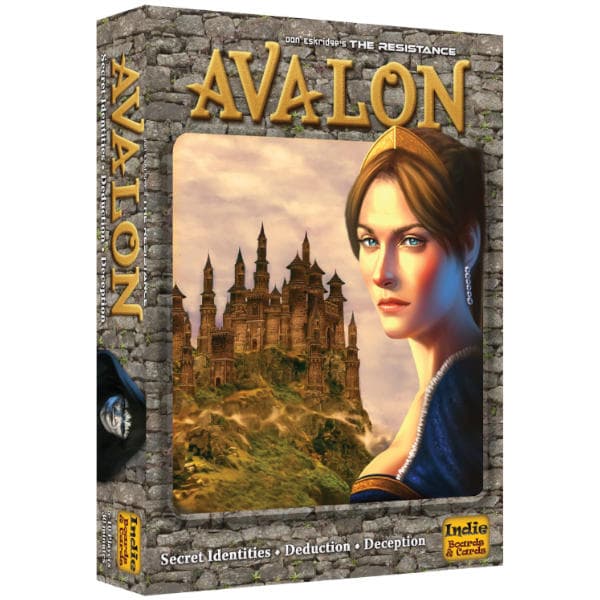
The Resistance: Avalon
Avalon is one of the few games that specifically calls out 7 as a great player count. The role distribution at 7 is 5 good vs 2 evil, which creates a tight paranoid dynamic.
With 7, the evil team is outnumbered but missions require only 2 or 3 people, giving them plenty of opportunities to sabotage. The voting table (how many players are needed for missions) is specifically calibrated for 7 in the rulebook. It's not an afterthought.
One of the best counts for this game. Role distribution is specifically designed for 7.
Deception: Murder in Hong Kong
Deception plays 4 to 12 players and the 7-player game is excellent. One player is the forensic scientist, one is the murderer, and the remaining five are investigators.
Five investigators means there are enough people to generate real suspicion and debate without the group becoming too large to follow. The forensic scientist has five people to guide without the clues becoming too obvious, and the murderer has enough cover to hide in a group of five.
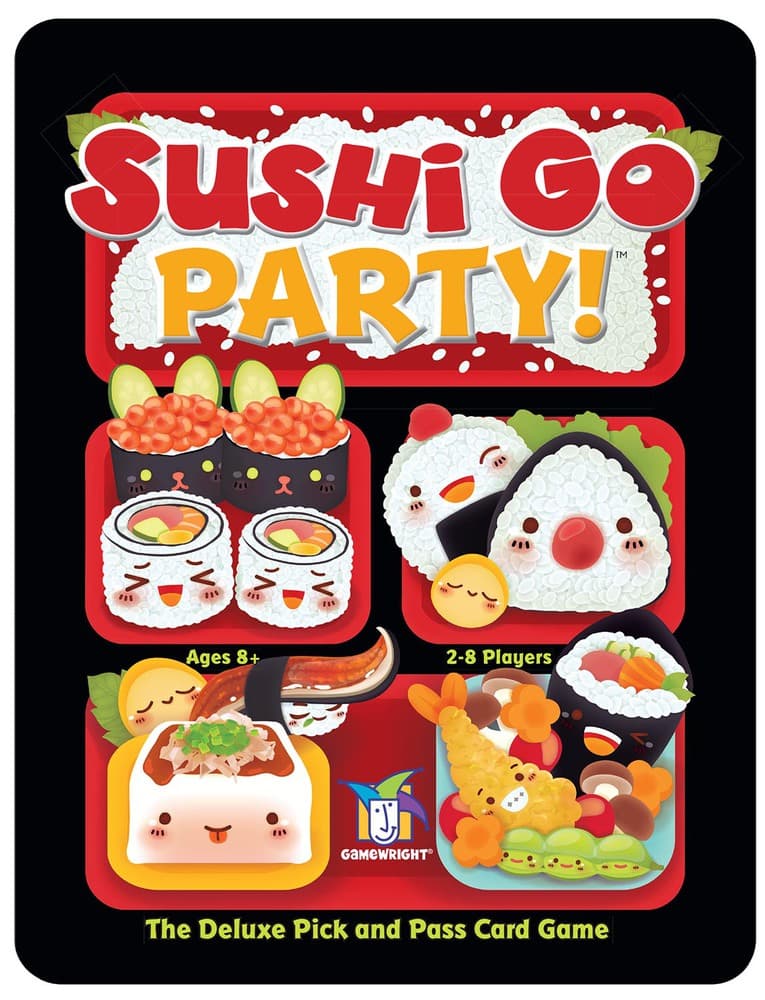
Sushi Go Party!
The Party version of Sushi Go scales to 8 players and includes a modular menu that lets you adjust complexity. At 7, the drafting is interesting because hands start at 7 cards and pass around almost the full table before the round ends.
It's lighter than 7 Wonders, plays in 20 minutes, and the food theme makes it immediately approachable for groups that include non-gamers.
20-minute simultaneous drafting that works cleanly at 7.
Tips for hosting 7 players
Turn-order games will drag. Avoid anything with complex individual turns that takes 5 minutes per player.
Real-time or simultaneous play is your best tool. Any game where everyone acts at once handles 7 people without downtime.
Team games that handle odd numbers well are: Wavelength (flexible splits), Codenames (flexible splits), and Avalon (purpose-built role distribution). Avoid games that need exact even splits.
Not sure which one to pick?
Answer a few quick questions and get a direct recommendation for your group.
Find the right gameLooking for Board Games & Game Night Recommendations?
Explore our group game finder, strategy guides, and game reviews.
🎲 Games in this guide