Best Board Games for 12+ Players (Double-Digit Groups)
When a dozen or more people show up for game night, standard turn orders collapse into chaos. Here's how to host double-digit groups without splitting the room.
- Best OverallBlood on the Clocktower(5-20 players)
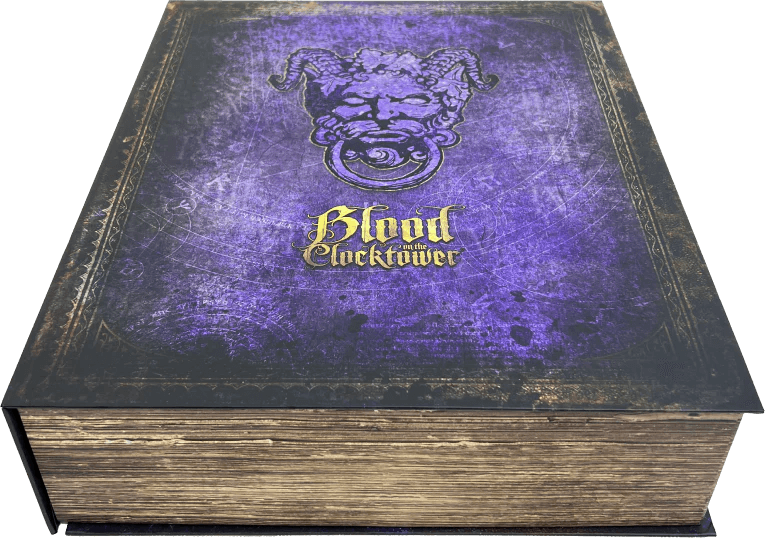
A social deduction game run by a Storyteller, designed for 5-20 players. Each player gets a character token with a unique ability — some are good Townsfolk, some are evil Minions, and one is the Demon trying to kill the town. During the night phase, the Storyteller taps players on the shoulder to use their abilities: the Empath learns how many of their neighbours are evil, the Ravenkeeper gets to check one player when they die, the Poisoner secretly invalidates someone's information. During the day, the town talks, accuses, and votes to execute someone. What separates it from Werewolf: dead players still participate. They can talk, argue, and vote (once). This single rule change fixes the biggest complaint about social deduction — nobody sits out for 45 minutes. The Storyteller isn't neutral. They tweak the game in real time, deciding how abilities interact and keeping things interesting. A good Storyteller makes the game feel like a story arc with rising tension. A bad Storyteller makes it feel arbitrary. There are three difficulty tiers of character scripts. Trouble Brewing is for new groups. Sects & Violets adds poisoned information and confusion. Bad Moon Rising is about damage prevention and healing. Each plays very differently. It's an event game, not a filler. Expect 60-90 minutes per game, plus 15 minutes of setup and explanation. But with the right group, it's the best large-group deduction game that exists.
- Best for StrategyMonikers(4-16 players)
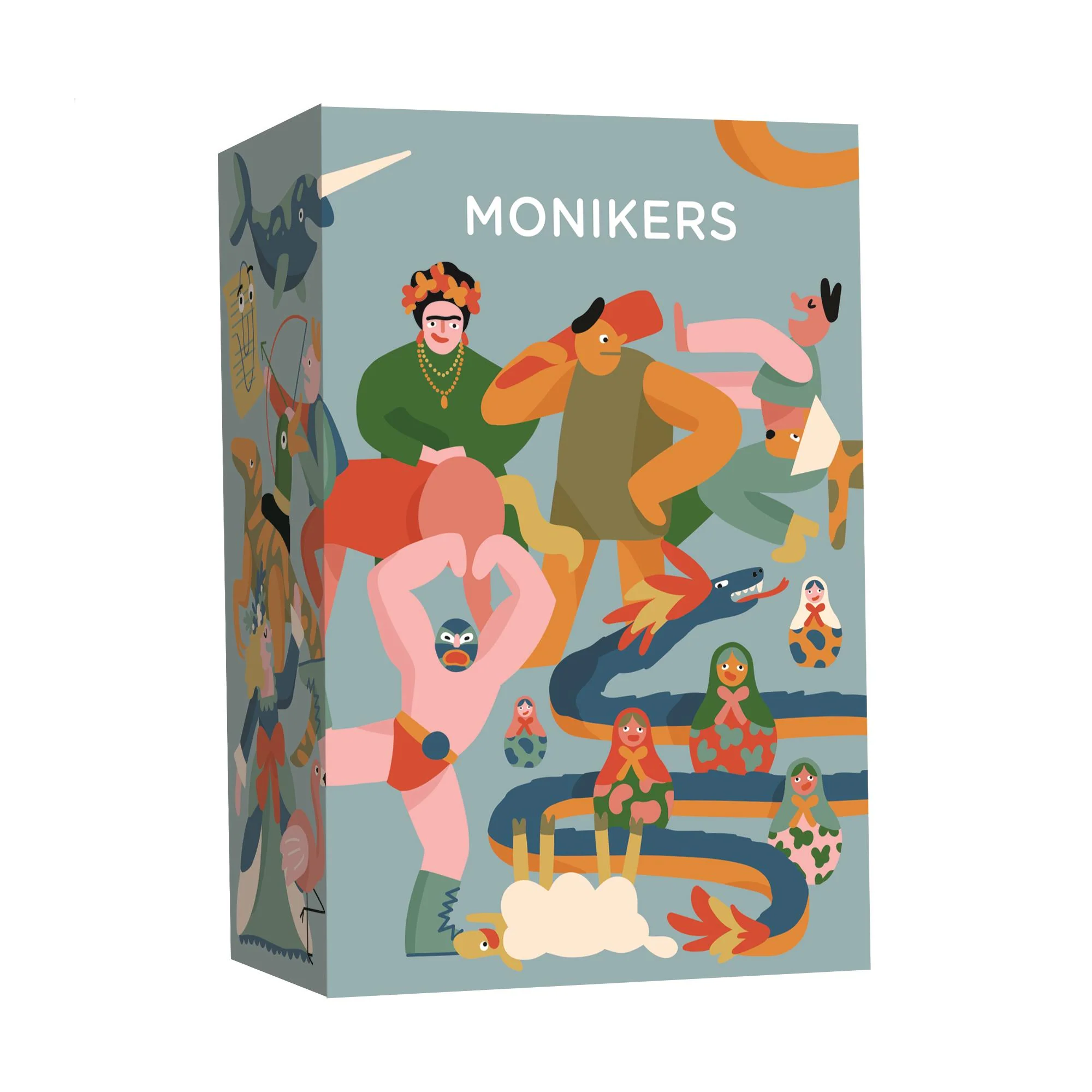
A party game played over three rounds with the same set of name cards. In round one, you can say anything you want to get your team to guess the name (like Taboo without restrictions). In round two, you can only say one word. In round three, you can only act it out silently. The key mechanic: you use the same cards all three rounds. So by round three, your team has heard every name at least once. The game shifts from "describe a thing you might not know" to "act out a shared inside joke that only exists because of the last 15 minutes". Round three is where the game peaks. Someone mimes three seconds of something incomprehensible, and their team yells the answer instantly because of a joke from round one. The table is in hysterics. It works because the group has built a private vocabulary over the course of the game. Before playing, everyone drafts the card pool. Each player gets dealt cards and keeps the ones they like, discarding the rest. This means nobody gets stuck with a name they've never heard of — which is a small design choice that fixes a major problem with similar games. Plays 4-16+ in teams. The more people, the louder it gets. There's no upper limit if you're happy splitting into larger teams. It works well as an evening centrepiece — games run 30-45 minutes and usually get an immediate "again".
- Great for BeginnersWelcome To...(1-100 players)
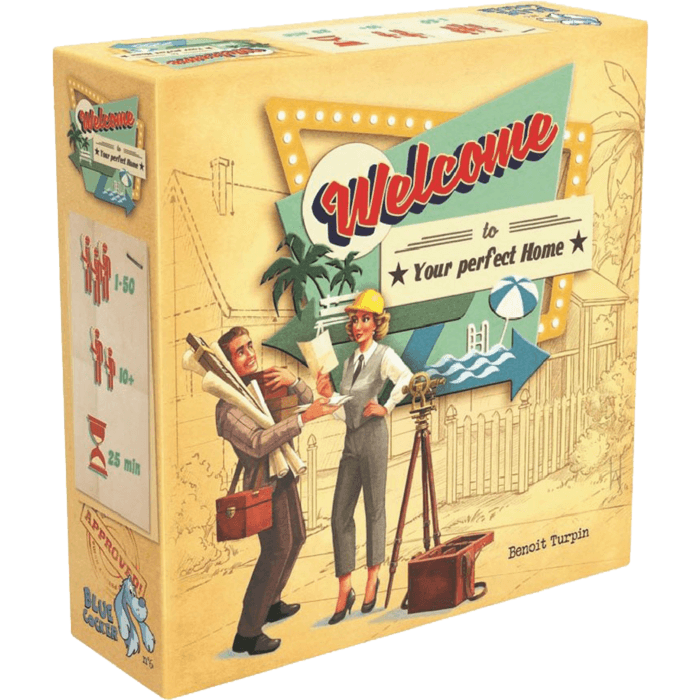
Three cards are flipped each turn. Every card shows a number and an action. All players simultaneously choose one of the three combinations and write it on their personal suburb map — a set of three streets where you're placing houses in ascending order. The numbers go onto houses. The actions let you build pools, parks, fences (to zone estates), or duplicate numbers. You're trying to fill streets, build specific estate configurations, and hit city plan bonus goals before other players do. Because everyone works from the same three cards, the game plays in exactly the same time whether there are 2 players or 50. There are no turns. No waiting. Everyone picks, writes, and moves on. The decisions are interesting without being stressful. You're balancing short-term opportunities against long-term street layout. Put a 7 too early on a street and you've blocked half the future options. But if nobody else has scored that city plan yet, maybe it's worth the risk. No direct interaction. You can't affect anyone else's board. Some groups see this as a feature — there's no blocking, no "take that", just parallel puzzle-solving. Others might find it too solitary. It works best in groups where people are comfortable chatting while playing. It's a "flip and write" game with a 1950s American suburb theme. The aesthetic is clean and retro. Dry-erase sheets mean infinite replays. There are also expansion packs that swap the theme (Vegas, Easter Island) and add new mechanics.
Best Board Games for 12+ Players (Double-Digit Groups)
Hosting a game night for 12, 15, or even 20 people is a completely different beast than hosting a table of 4.
At double-digit player counts, traditional turn-based board games become unplayable. If 14 people take 90-second turns, you will wait twenty minutes between actions. Half the room will walk off to the kitchen, and the game will dissolve into background noise.
To successfully run a game for 12 or more players, you must rely on one of three architectural designs:
- Simultaneous Play / Roll-and-Write: Everyone takes their turn at the exact same time.
- Large-Scale Social Deduction: The game is driven by group discussion, secret votes, and sub-group whispering.
- Real-Time Team Games: Fast physical interaction with zero turn waiting.
Here are the absolute best titles for massive double-digit gatherings.
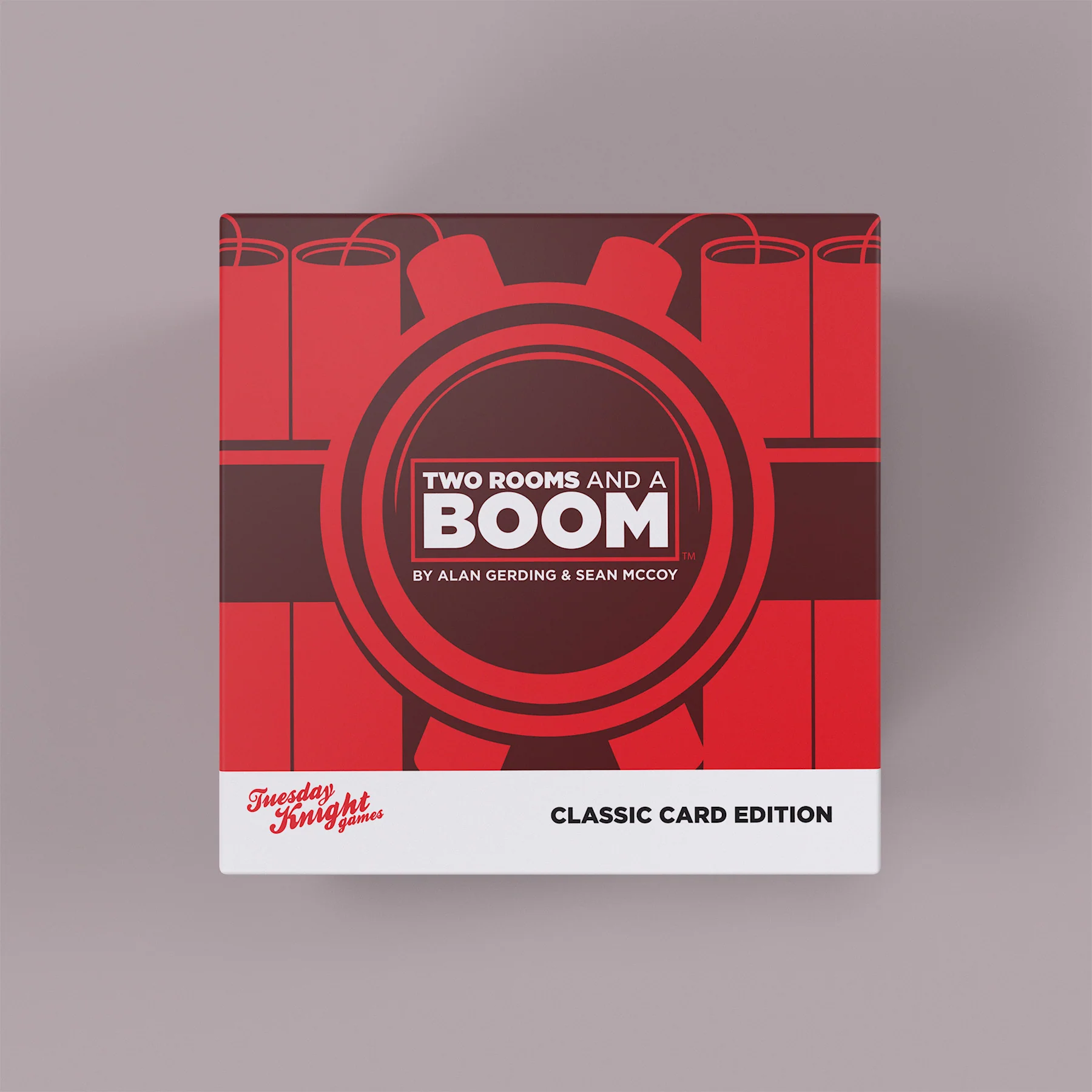
1. Two Rooms and a Boom
Two Rooms and a Boom is explicitly engineered for 6 to 30+ players and requires zero table space.
The host splits the group into two separate rooms. One team has a President, while the other team has a Bomber. Over three timed rounds, players converse, trade secret role cards, and elect leaders to swap hostages between the two rooms. At the end of round three, if the Bomber is in the same room as the President, the Red team wins; otherwise, the Blue team prevails.
It is loud, strategic, and gets people physically moving between rooms.
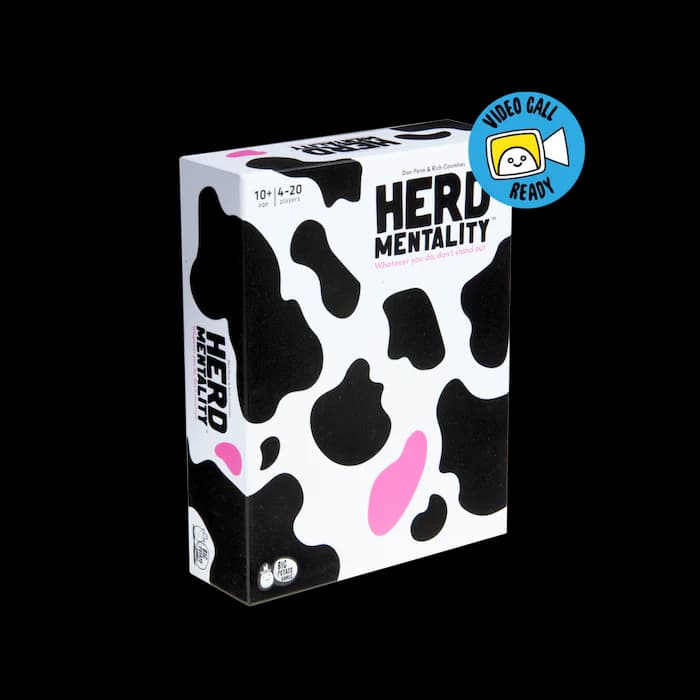
2. Herd Mentality
Herd Mentality comfortably scales up to 20 players out of a single box.
The question master reads a prompt (e.g. "Name a fruit beginning with A"). Everyone writes their answer on a paper pad in secret. You don't score points for being clever—you score points if your answer matches the majority opinion of the room. It plays fast, requires zero gaming experience, and scales effortlessly to large living rooms.
3. Blood on the Clocktower
For serious gamers hosting 12 to 20 people who want an immersive, murder-mystery evening, Blood on the Clocktower is the gold standard.
Set in a gothic village where a Demon is killing townsfolk each night, players deliberate, form secret alliances, and vote on executions during the day. Crucially, when a player dies, they are not eliminated from the game. Dead players retain their vote token and participate in every conversation until the final day.
4. Welcome To...
Welcome To... is a "flip-and-write" architecture game that technically supports an unlimited number of players.
The host flips three card combinations, and every single player records their building choices on their own paper score sheet simultaneously. Whether you have 4 people or 40 people at your event, the game takes the exact same 25 minutes to complete.
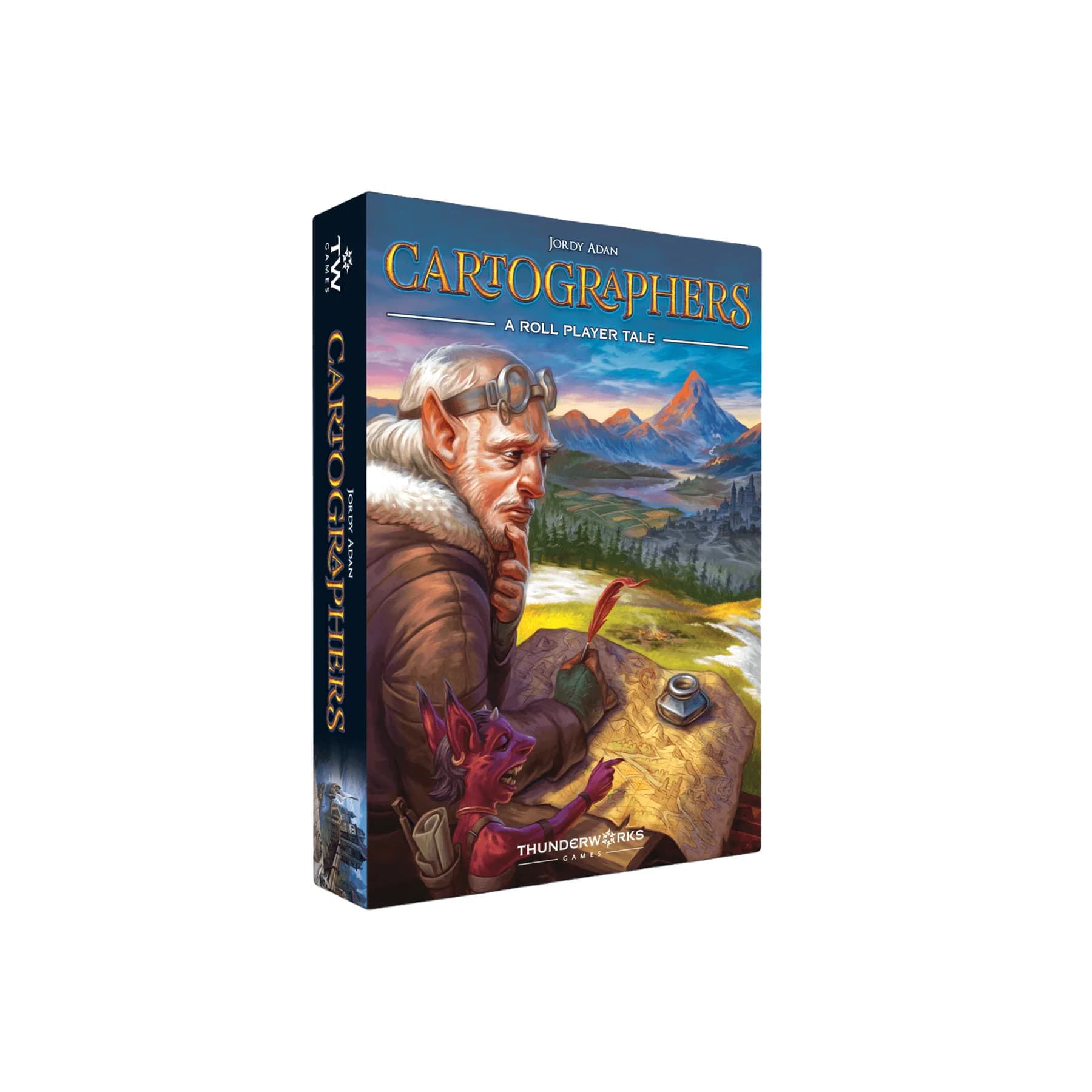
5. Cartographers
Similar to Welcome To..., Cartographers is a fantasy map-drawing game where a card is revealed and all players draw terrain shapes onto their individual grid maps at the same time.
It offers rich puzzle decisions, beautiful map creation, and scales to any crowd size without adding a single second of downtime.
6. Monikers
Monikers is a team guessing game that scales easily to 12 or 16 players split into two large teams.
Using the same deck of cards across three rounds, Round 1 allows you to say anything to describe the card. Round 2 restricts you to a single word. Round 3 is pure charades. Because the same cards repeat each round, inside jokes escalate rapidly, creating an electric atmosphere for big parties.
Pro-Tip for 12+ Player Nights
If you have more than 12 guests, make sure your venue has enough space for group movement (or separate room areas for games like Two Rooms and a Boom). For stationary games, pass out clipboards or hard surfaces so players can write comfortably without crowding a single table!
Not sure which one to pick?
Answer a few quick questions and get a direct recommendation for your group.
Find the right gameLooking for Board Games & Game Night Recommendations?
Explore our group game finder, strategy guides, and game reviews.
🎲 Games in this guide