Best Board Games That Scale to Any Number of Players
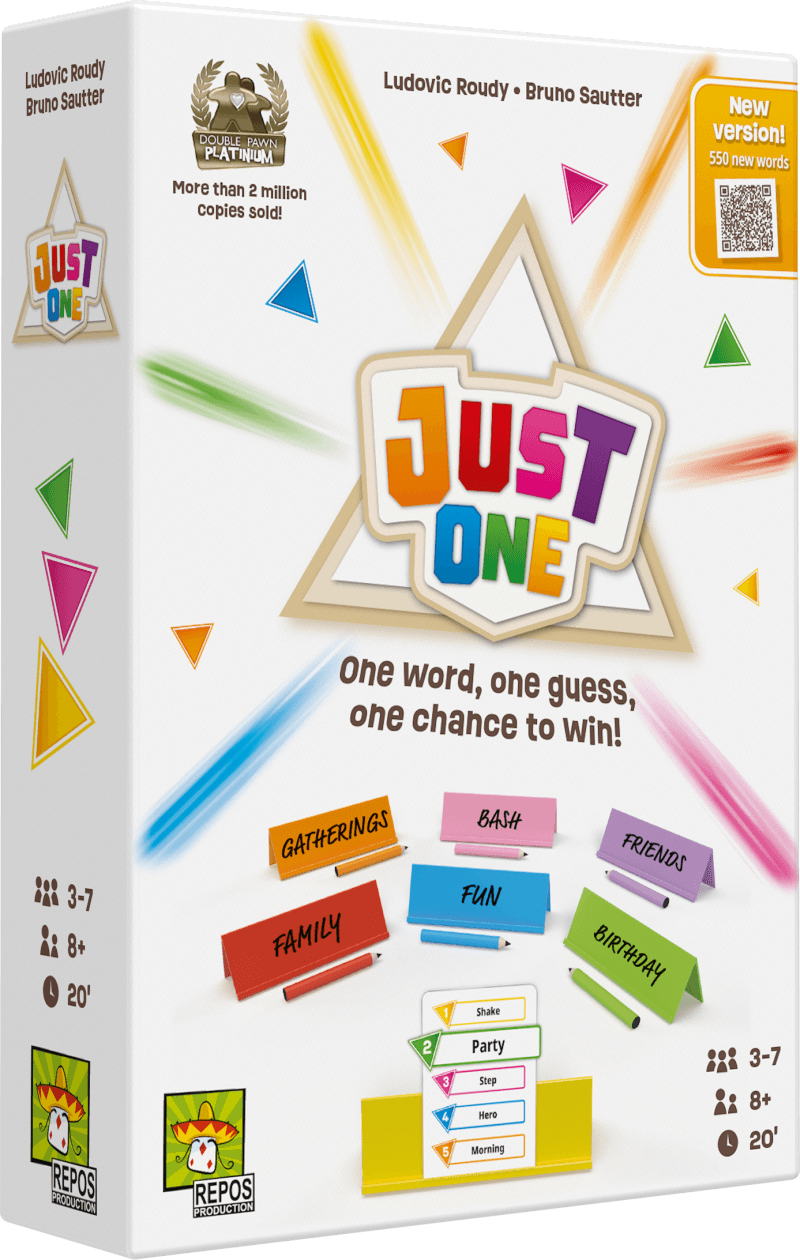
- Best OverallJust One(3-7 players)
👉 One player closes their eyes. A word card goes up — say, "Pyramid". Everyone else secretly writes a one-word clue to help the guesser. Before the guesser opens their eyes, you compare clues. Any duplicates get removed. So if three people wrote "Egypt", all three get cancelled. The guesser only sees the remaining clues. Maybe they're left with "Pharaoh" and "Triangle" and that's enough. Maybe everyone wrote the same thing and they get nothing. That's the whole game. No scoring track, no special powers, no complicated rules. You play 13 cards and count how many the guesser got right. The fun is in the duplicate-cancelling. You want to be helpful, but you also don't want to write the obvious clue that everyone else will write. It creates this tension where you're trying to outthink your own teammates — not to beat them, but to help them differently than everyone else. Works best with 5-7 players. Fewer than that and duplicates rarely happen, which removes the interesting part. It's a Spiel des Jahres winner and probably the single lowest-friction game you can bring to any social gathering.
- Best for StrategyWavelength(2-12 players)
👉 One player — the "psychic" — sees a hidden target on a spectrum between two extremes. The spectrum might be "Hot ↔ Cold" or "Bad Pet ↔ Good Pet" or "Underrated ↔ Overrated". The target sits somewhere on that scale, and the psychic gives a single clue to try and get their team to guess where it is. Then the team argues about it. That's the game. "She said 'Igloo' — that's clearly far to the Cold side." "No, but an igloo is actually warm inside, so maybe it's more centre." The dial gets placed, the answer is revealed, and everyone either cheers or groans. There are no complicated rules to remember, no cards to manage, no turns to wait through. The physical dial component is satisfying — you slide it, lock it in, and then reveal the actual target by lifting a cover. It's tactile in a way that most party games aren't. It's at its best with 6-8 players split into two teams, but it works with any group size. The conversations it generates are genuinely interesting — you end up learning how differently the people around you interpret the same concept. Some groups use it as a warm-up. Others play it for the whole evening.
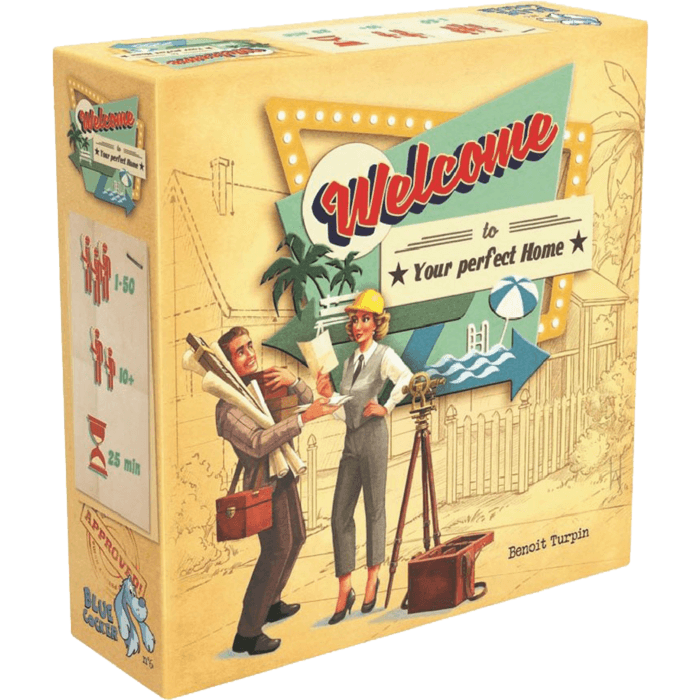
- Great for BeginnersWelcome To...(1-100 players)
👉 Three cards are flipped each turn. Every card shows a number and an action. All players simultaneously choose one of the three combinations and write it on their personal suburb map — a set of three streets where you're placing houses in ascending order. The numbers go onto houses. The actions let you build pools, parks, fences (to zone estates), or duplicate numbers. You're trying to fill streets, build specific estate configurations, and hit city plan bonus goals before other players do. Because everyone works from the same three cards, the game plays in exactly the same time whether there are 2 players or 50. There are no turns. No waiting. Everyone picks, writes, and moves on. The decisions are interesting without being stressful. You're balancing short-term opportunities against long-term street layout. Put a 7 too early on a street and you've blocked half the future options. But if nobody else has scored that city plan yet, maybe it's worth the risk. No direct interaction. You can't affect anyone else's board. Some groups see this as a feature — there's no blocking, no "take that", just parallel puzzle-solving. Others might find it too solitary. It works best in groups where people are comfortable chatting while playing. It's a "flip and write" game with a 1950s American suburb theme. The aesthetic is clean and retro. Dry-erase sheets mean infinite replays. There are also expansion packs that swap the theme (Vegas, Easter Island) and add new mechanics.
Not sure which one to pick?
Let us recommend the best game based on your group's preferences.
👉 Use the Game Finder🎲 Games in this guide