Best Strategy Board Games for Large Groups
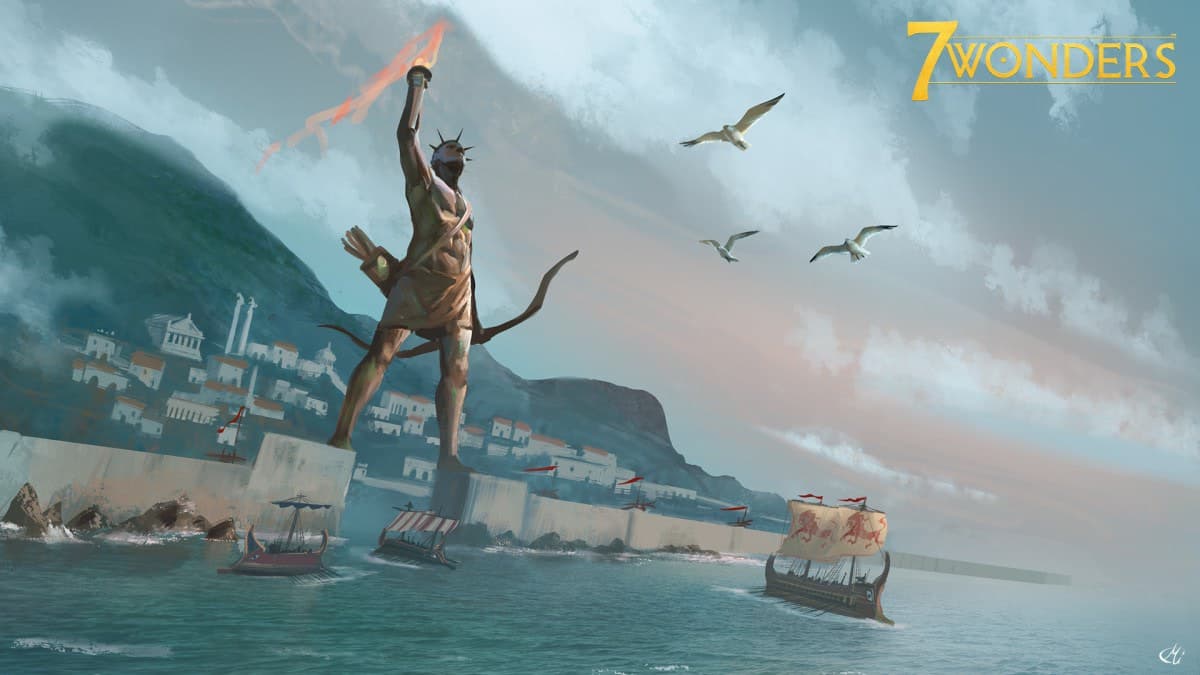
- Best Overall7 Wonders(3-7 players)
👉 A card-drafting civilisation game where everyone picks cards simultaneously. You're dealt a hand, pick one card to play, and pass the rest to your neighbour. Then you all reveal at the same time. Repeat until the hand is empty. Do this three times (three "ages") and count up your points. Cards are resources, military, sciences, guilds, and civic buildings. Resources let you build better cards later. Military compares you to your direct neighbours — you only fight the person to your left and right, not the whole table. Science scoring is a set-collection puzzle that rewards specialisation. The reason 7 Wonders has lasted since 2010 is the timing. A 7-player game takes the same 30-35 minutes as a 3-player game, because everyone plays at the same time. There's no waiting. No downtime. No turns that drag because someone's calculating. Each player also has a unique Wonder board with a staged construction track that gives bonuses as you build it. These are asymmetric enough to nudge strategy without overwhelming new players. It's the go-to "proper" strategy game for groups that are too large for most strategy games. The rules take about 10 minutes to teach, the iconography makes sense after one age, and the tactical depth is enough to reward experienced players without punishing newcomers.
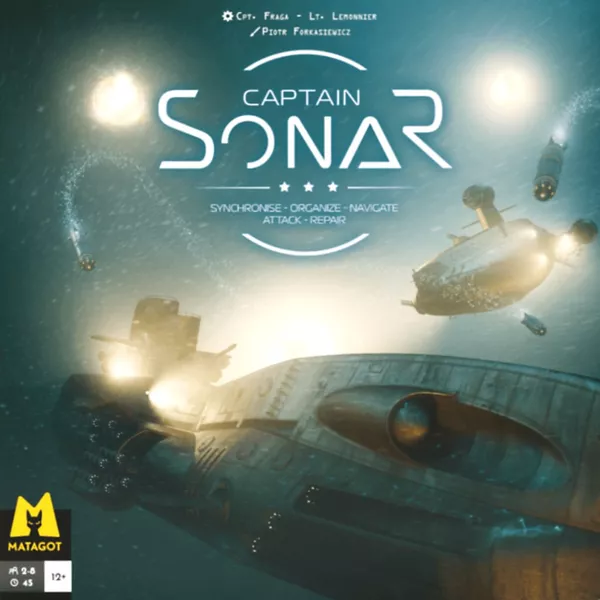
- Best for StrategyCaptain Sonar(2-8 players)
👉 Two teams of four sit on opposite sides of a table with a screen between them. Each team is the crew of a submarine. One player is the Captain, calling movement directions. One is the Radio Operator, listening to the enemy Captain and tracking their position on a transparent overlay. One is the First Mate, charging weapon systems as the sub moves. One is the Engineer, managing the systems that break down with each movement. In real-time mode, there are no turns. Both Captains are calling directions simultaneously. The Radio Operator is frantically tracking. The First Mate is yelling that the torpedo is charged. The Engineer is telling the Captain they can't go North because the engine will blow. The game is chaos by design. Information is imperfect. Communication breaks down. Someone fires a torpedo at where they think the enemy is, and either the room erupts in cheering or someone quietly announces "miss" and the hunt continues. There's also a turn-by-turn mode for groups that prefer structure, but the real-time mode is the reason this game exists. It creates a kind of pressure and teamwork that nothing else really replicates. It needs exactly 6 or 8 players. At 6, one person doubles up on roles. Fewer than that and it doesn't really work. You also need a physical table long enough for two teams to sit across from each other, which is worth thinking about before you buy it.
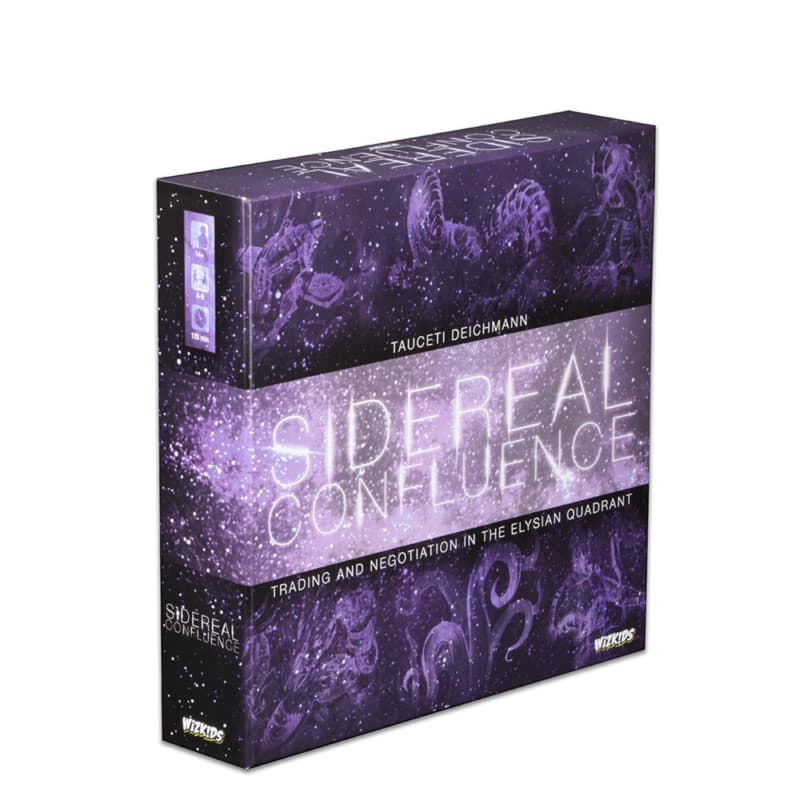
- Great for BeginnersSidereal Confluence(4-9 players)
👉 Each player controls one of nine alien races, each with a completely different economy. Your race has converter cards that turn input resources into output resources — but you probably can't produce the inputs you need. So you trade. Trading happens simultaneously and in real time. There are no turns during the trade phase. Everyone is negotiating at once. "I'll give you three white cubes for two green." "I need a colony ship — who has one?" "I'll swap you my small converter for your large one and throw in two cubes." Deals can be anything. Any resource, any promise. After trading, everyone simultaneously runs their converters, produces new resources, and scores points. Then a new set of technologies becomes available through a shared bidding system. Repeat for six rounds. The asymmetry is deep. The Kt'Zr'Kt'Rtl (yes, that's a name) have a biological economy that literally grows. The Faderan have intellectual technologies that create resources from nothing but need other races' outputs. The Yengii are good at pure trading but produce little on their own. Each race needs different things from different races. This is a heavy game. The teach takes 30-40 minutes. First-time players will be confused for the first two rounds. But the trading is so inherently social — it's literally just making deals with people — that most groups find the energy even through the learning curve. Plays 4-9. The 9-player game is the full experience — every race at the table, maximum trade options, maximum noise. Games run about 2 hours. It's one of the very few heavy strategy games that actually gets better with more players.
Not sure which one to pick?
Let us recommend the best game based on your group's preferences.
👉 Use the Game Finder🎲 Games in this guide